


 Create your own at http://comicomatic.com/index.php

About a month ago, I purchased an iPad from the Apple online store. I am greatly enjoying it, thank you. But the inspiration for this post is not the use of the iPad, but the experience of purchasing and getting it delivered to me.
If we look at the Fedex tracking below, we will find that the iPad did not leave from an Apple warehouse in the US, but directly from the manufacturing place in China.
iPads shipped from China directly to end-users in the US
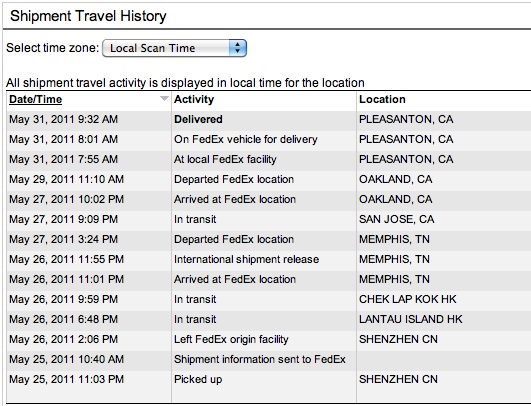
It makes sense, no? Apple is shipping so many iPad’s that Fedex can probably consolidate full shipping containers flying over the Pacific anyway. A US-based warehouse would just add more cost and time to fulfill orders, so there is no reason for not having the contract manufacturer in China drop ship them directly to end users.
When I placed the order, I was able to request custom engraving of my name on the back of the unit. So that unit was mine from the time it left the assembly line and was packaged for the first time.
That level of personalization would not be possible if Apple and Foxconn, its manufacturing partner, were not working intimately together and sharing information about my order.
Boundaryless Organization
This term was originally coined by Jack Welch, former chairman of GE, to describe companies that break down barriers between them and their customers and suppliers.
Companies need to embrace suppliers as true partners to seamlessly deliver value to its customers. That is how I, the consumer, get the experience of a personalized product even before I open the box to use it for the first time.
That is true for suppliers, but should companies also embrace its customers within its boundaries, to include them in the value creation process?
More and more, the answer is yes.
IKEA has the smartest furniture assemblers in the business: You
One of the biggest logistic challenges of the furniture business is that products like desks and bookcases are difficult, expensive and fragile to transport when fully assembled.
IKEA, a Swedish company, eliminated that problem by selling furniture in flat packs and having customers to carry and assembly it themselves once they get home.
In this case, the company included their own customers in the value delivery chain and, by doing that, was able to deliver relatively stylish and high-quality furniture at very low-cost and an overall better customer experience. Because delivery of the product is a huge pain point in traditional business, for many customers, the extra work (or fun, perhaps) of assembling furniture is offset by the benefits.
Embracing customers as your brand advocates
The “Social” in Social Media means that influence travels from person to person, following social connections and interactions. Instead of buying broadcast media to reach all potential customers directly, companies need to embrace and include customers as past of the marketing strategy.
If you provide a positive experience to your customers, and provide them with the knowledge and resources to influence others, they will bring their friends to you. That is the essence of social media marketing.
In the 21st century, companies need to break the isolation with supply chain partners to deliver customer-centric product/service experience. They also need to break the break the isolation with their customers so that they can expand their business.
In other words, boundaries of the traditional corporation dissolves. The new company need to see itself as part of an integrated value delivery ecosystem.
Four ways to go boundaryless
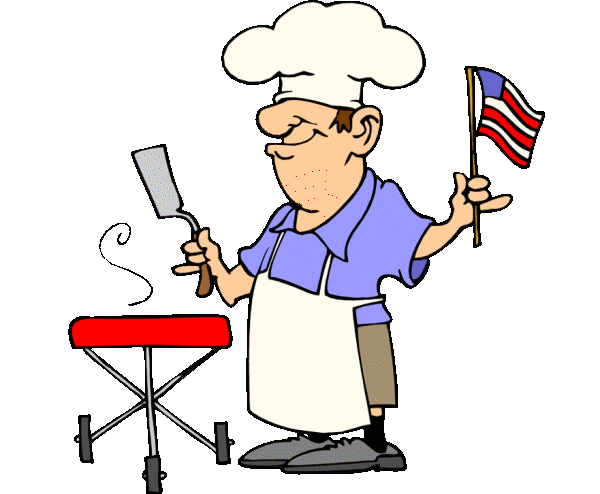
Explaining the “Brazilian Churrasco” to US Americans
Today is Fourth of July, the day we celebrate Independence Day, usually by lighting up the grill and inviting family and friends to a backyard barbecue.
(if you are Brazilian, you should read this post instead).
I was born in Brazil, another country where eating meat is an important piece of the diet and cultural identity. Having lived in California for 20 years and spent some time in Australia (another country with BBQ credentials) and Alabama (where “BBQ” means something very different), I have seen many cultural misunderstandings when it comes to eating beef.
So, before heading out to the Fourth of July BBQ, I sat down this morning to write about the American way of eating beef for Brazilians. After publishing that article, I realized it would be fun to do the reverse and try to explain the Brazilian way of eating beef for my American friends.
In the past years, “Brazilian Steak Houses” or Churrascarias became very popular in the US. If you open an airline magazine, more than half of the advertisements are for those relatively expensive dining experiences.
First, the Beef
Brazilian cattle have more “Zebu” (original from India) in its genes. American beef has more “Taurine” (from Europe). US cattle is raised confined and “grain-fed”, not eating grass in an open pasture as designed by nature.
As a result, American beef is fattier and tenderer than natural beef you would find South of the Equator. In fact, the USDA classification of beef assumes “marbling” (fat deposits within the meat – side-effect of corn feeding) as an indication more desirable beef.
The way we cut beef is also different. The most popular cut for grilling in Brazil is “Picanha” (which is a piece of Top Sirloin), which in the US is hard to find because it gets separated and mixed with other cuts of beef. The closest you will find in a typical US supermarket of what Brazilians would consider a good piece of beef for grilling is Sirloin or Tri-Tip.
Steak house cuts (Rib Eye, NY Strip) are also popular in Brazil for everyday thin pan-fried steaks (the same steak you find in French Steak Frites), but not the most prized for grill cooking.
Churrasco and South America Pampas
A Churrascaria is a restaurant where servers dressed in Gaúcho attire walk around holding big pieces of beef on skewers and slicing them into mesmerized guest’s plates. It is “all-you-can-eat” meat, there is usually a good salad bar.
Eating at a churrascaria is an experience and, to a large degree, it is an authentic Brazilian experience.
“Churrasco” is meat cooked over an open flame, typically in very large pieces using very large skewers. It can also be used to describe beef cooked on a grill over coals (much like the barbecue).
Gaúchos (gah -oooo -chos) are the peoples in the South-American pampas (South of Brazil, Uruguay, Argentina), the South American “cowboys”. They eat a lot of beef and also drink Yerba Mate tea.
A Brazilian Barbecue
What should you expect if you visit Brazil and someone invites you for a barbecue (“churrasco”) in their backyard?
Churrascarias are a very specific type of restaurant and are not necessarily the way Brazilians eat beef most of the time.
A typical “barbecue” will not be very different from what I see in California: family and friends, beer and Caipirinha (Brazilian signature cocktail made of cachaça, lime, sugar), a charcoal grill.
There might be other types of meat (chicken, sausages are common), but the star of the grill will be pieces of “Picanha” (top sirloin). Brazilian churrasqueiros will argue about the “right way” of grilling it, but most will agree on the following:
– Cut the piece of Top Sirloin (you can improvise with Tri-tip as well) in very thick steaks (leave the outside layer of fat on)
– Season it right before going to the grill with lots of coarse rock salt
– Grill it over charcoal until medium rare then cut in smaller byte-size pieces on a plate
– You can use your hands. Some like to dunk the morsel of meat in cassava flour before eating it.
Ok, need to leave or I’ll be late for Fourth of July barbecue.
O que o brasileiro tem que saber para comer carne nos EUA
(if you are not Brazilian, you should be reading this post instead)
Hoje é 4 de Julho, dia que se comemora a Independência dos Estados Unidos. E também o dia aqui na California em que se acende a grelha no quintal e se convida os amigos para uma cerveja e… um churrasco.
Comer carne é parte importante da cultura e da dieta brasileira e americana. Como nasci no Brasil, moro na California, visitei a Australia (outro pais com tradição churrasqueira) e já passei um tempo no Alabama (onde barbecue tem outro significado), já vi muito mal-entendido quando o assunto é comer carne.
Então, antes de sair para o meu BBQ de quatro de julho, sentei aqui para esclarecer algumas dessas confusões.
Primeiro, a carne
O boi americano é genéticamente diferente do boi brasileiro. O brasileiro tem mais “Zebu” (originado na India) enquanto o boi americano tem mais “Taurino” (originado na Europa). Os métodos de criação de gado nos EUA são mais intensivos, com o boi confinado e alimentado com milho e outros grãos.
O resultado é que a carne bovina americana é mais gordurosa, mas macia e provavelmente menos saudável. No sistema de classificação do USDA (Departamento de Agricultura), uma carne tem graduação mais alta quando tem mais “marbling” (gordura misturada na carne, resultado da alimentação com grãos).
Os cortes de carne nos EUA também são diferentes. Para entender os detalhes, veja esse artigo. Alcatra é “Eye Round”. Contra-Filé é “Strip Steak/Rib Eye”. Maminha é “Sirloin”. Picanha é difícil de encontrar (porque ele acaba dividido e misturado com outros cortes), mas quando se acha, é “Top Sirloin”.
Confusão, confusão
No Brasil, nós comemos “bife” (uma porção de carne, cortado em um filé fino, normalmente frito na panela ou chapa e servido no prato) ou “churrasco” (normalmente assadas no espeto ou na grelha e fatiadas no momento de servir).
Imagino que “bife” é uma tradução mal-feita de “beef” a palavra em inglês para designar carne bovina. Bife aqui é “steak”.
“Barbecue” é uma palavra usada nos paises de língua inglesa para o aparato para se cozinhar carne (a “churrasqueira”) ou o evento onde se prepara carne na grelha (a “churrascada”).
Mas no sul dos EUA “Barbecue” (BBQ) tomou significado próprio. É uma forma específica de se preparar carne (normalmente suína): a carne é defumada e cozida em temperatura baixa por várias horas até ficar bem macia (“fall off the bone”) e servida com um molho doce a base de tomate, vinagre e acúcar (“BBQ sauce”).
- Carne = Beef
- Bife = Steak (maior e mais grosso que bife)
- Churrasqueira = Barbecue (fora dos EUA)
- Churrasqueira = Grill (EUA)
- Churrasco = Barbecue (California)
- Carne desfiada com molho = Barbecue (EUA)
- Não coloque molho BBQ no bife ou churrasco
Então, como se come carne nos EUA?
Enquanto no Brasil tem gente que come um “bife” quase todo dia, nos EUA, quem come carne no dia-a-dia, normalmente o faz na forma de hamburger no restaurante fast-food.
O “steak” americano é um pedaço substancial de carne (normalmente 300-500g) de uns 3cm de altura, temperado com sal e pimenta do reino, preparado na grelha e servido ao ponto. É como se come carne quando se vai a um “steak house”.
Os cortes melhores e mais populares são o “Rib Eye Steak” ou o “NY Strip Steak” (ambos em torno do contra-filé).
Quando se pede carne em um restaurante, você vai ouvir a pergunta “How do you want your steak cooked?” As respostas esperadas são “rare” (tostado fora, cru por dentro), “medium-rare” (ao ponto, que é o ponto certo), ou “medium” (um pouco mais passado que ao ponto). Se você disser “medium-well” ou “well-done” (bem passado), corre o risco de ser chutado para fora do restaurante (o que seria bem merecido).
A imagem que americano come “hamburger e hot dog” é correta até certo ponto, mas é normalmente distorcida para indicar que americanos não entendem de carne (o que não é verdade).
No churrasco do quintal, hot dogs são para as crianças. Além dos “steaks”, o corte mais comum para se assar carne na grelha em peça inteira é o “tri-tip”.
Nos EUA, o termo “Barbecue” pode ser usado como o brasileiro usa “churrasco” (uma reunião onde se prepara carne na grelha), mas também indica um jeito específico de se preparar carne no sul (defumada, assada em fogo baixo por horas, servida com molhos doces).
Preste atenção no contexto. Se estiver na California e te convidarem para um BBQ no quintal, provavelmente é um churrasco como você está acostumado. Se perguntarem se “voce gosta de BBQ?” ou convidarem para ir a um “BBQ restaurant”, isso significa outra coisa.
Colocar molho BBQ no steak é confusão de Californianos que não entendem de carne e que (pasmem) as vezes é copiado em outros lugares por gente desinformada. Em boas steak-houses, pedir “BBQ sauce” é ofensa ao mestre churrasqueiro.
Churrascarias, ou “Brazilian Steak Houses” ficaram comuns nos EUA nos últimos anos. O Fogo de Chão (que tem mais restaurantes nos EUA que no Brasil) e outra cadeias brasileiras tem restaurantes na maioria das capitais americanas. O americano sofre tentando pronunciar “churrascaria”, mas gosta da experiência.

The impact of Social Media in Customer Feedback
A few weeks ago I wrote a post arguing the not all the excitement is justified, that some of the early experiences with Customer Service in Twitter are not sustainable in the long-term. But I do think adoption of Social Media by customer service departments is mandatory and can have a very positive impact on customer experience and bring change to the Marketing/Customer Service balance in companies.
Quality and Excellence
Quality is defined as “consistently meeting specifications”. It is, by definition, a statistical exercise: constantly measure results and manage the process so that we can control and continuously improve it. This is how you can be confident your Big Mac will taste about the same whether you are ordering it New York, Fresno, or Shanghai.
Consistency and predictability has value. That is why we stop at McDonald’s when we feel the need for a quick and predictable meal when driving across an unknown stretch of road.
When it comes to Customer Service, quality is achieved by monitoring results (through operational metrics like resolution times) or by directly measuring customer satisfaction (through feedback methods like customer surveys). Close the loop and you can ensure that identifying past problems will help you to offer a better and more consistent experience to future customers.
Alice Water’s Chez Panisse restaurant is a temple of California cuisine. Potatoes are not shipped pre-cooked and frozen from some national distribution center. They might not even be in the menu if it is not the right time of the year. Diners are not looking for consistency or predictability in a special-occasion restaurant. They want to be surprised and expect a memorable experience. They are looking for excellence.
In Customer Service, excellence is achieved by empowering the front-line agent to autonomously solve problems on the spot within reasonable business parameters. Prioritizing quick resolution will occasionally generate service inconsistencies and might limit the ability of the organization to learn about root cause of problems.
There is no intrinsic conflict between quality and excellence, but there are operational trade-offs every company needs to make. The most successful are the ones who can strike the right balance.
But in the era of Social Media…
Social Media does not change the business basics. What it does is change the business environment outside the company.
When the media let customers air dissatisfaction in public, customer service problems affect more than just one specific person. Other prospects watching the interaction are influenced by a negative exchange. On the other hand, a happy customer praising a quick problem resolution might influence many others favorably.
That peer-to-peer influence (which mirrors old-fashion business in small communities of the past) and the loss of control by the company over media (like in print and broadcast) increase the relative importance of excellence over quality. It favors companies that can develop deeper relationships with their customers because customers behave as a community, not as isolated individuals.
It is necessary but no longer enough to detect and measure past problems to improve future service. Without excellence, there might be no future customers.
Adopting Social Media is a shift driven by the market as customers become empowered by the new medium. It neither solves all problems nor is necessarily a better way of doing anything.
But it is a reality. Adoption of Social media by companies is not mandatory only because survival is optional.
In Conclusion
The impact of social media is the ability to get feedback without being intrusive and, for most businesses, to shorten the time between awareness and action so that we can fix customer experiences before they become bad experiences.
 What you can learn about social business in the Farmer’s Market
Saturday mornings is farmer market’s day Guarulhos, Brazil, where I grew up. My mom is a customer of this particular meat stand for more than 35 years now.
Last week I was in Brazil and woke up early on Saturday to accompany her grocery shopping for the week.
When we arrived at the meat stand, the butcher greeted mom and looked at me. After a few seconds of puzzlement, he smiled. “The boy who went to college and then moved to California!” (in the community where I grew up, going to college is memorable).
He immediately left what he was doing, cleared the edge of the stand and pulled a few boxes to improvise a coffee table. He then got a thermos from his pack under the counter and served three cups of coffee. Made us sit there and asked me how I had been.
That is a portion of the world frozen in time. My mom doesn’t use a bankcard. The food sellers know what she buys every week and some still remember that I used to follow her as a child along those aisles 35 years ago.
Brazil is changing fast and Carrefour and Walmart are building giant supermarkets all over the country as fast as they can, selling meats in much flashier (and probably more sanitary) facilities.
Business is no longer like it was in the good old times.
Or is it? As most of the world is still shifting from relationship-based business to a marketing-driven business models, in Social Media circles and Enterprise 2.0 conferences the talk is about a new era of “Social Business”, where companies invest on building personal relationships and creating positive customers experiences and trust that “marketing” will take care of itself if we our job well.
Happy customers tell others about their experiences and bring their friends. That is how business has always been done.
I certainly don’t expect the butcher at a Carrefour store to remember me after 35 years and invite me for coffee. But companies who spend more energy promoting themselves than understanding and addressing customer’s needs will not survive in an era where consumers recover the ability to influence each other via Social Media in a similar way as they did in small communities.
And, if you grew up in a small community, I suggest you go back to some old store of the past and see how business is still done there. You might learn more about business than at an Enterprise 2.0 conference.
Por que uma latinha de Skol no Pão de Açúcar de São Paulo custa mais que uma Budweiser no Safeway de San José?
A vantagem de morar fora do Brasil é que eu visito apenas uma ou duas vezes por ano e, as vezes, percebo mudanças melhor que as próprias pessoas vivendo a realidade brasileira no dia-a-dia.
Depois de bater no fundo do poço no início da década de 90, cada vez que venho ao Brasil fico feliz com os avanços em todas as áreas, e principalmente na economia: controle da inflação, redução da pobreza e diferenças de renda, redução do desemprego, estabilidade da economia, abertura para o mercado internacional, projeção internacional.
A escolha do país para sediar a próxima Copa do Mundo e Olimpíadas parecem ser símbolos marcantes da ascenção do país no cenário internacional.
Mas dessa vez (estou na última de 3 semanas de uma visita a trabalho) está sendo um pouco diferente.
Algumas coisas estão tão positivas como em minha última visita. O Brasil vive uma situação de pleno emprego (desemprego em torno de 6%), e o clima é de otimismo. A economia está crescendo, empresas internacionais investem no país e novas multinacionais brasileiras extendem o alcance fora das nossas fronteiras.
Mas eu estou um pouco preocupado lendo os jornais e principalmente na minha experiência no dia-a-dia de um visitante.
Começou com a reserva do hotel. Estou no Íbis de Campinas. Um hotel business básico. A diária é R$139. A diária no Íbis de Munique na Alemanha, da mesma rede, cobra diárias de 59 Euros (R$135). Um hotel da mesma categoria na cidade onde eu moro na Califórnia cobra cerca de US$75 (R$120).
Ou seja, a diária de um hotel no Brasil está igual ou mais alta que hotéis equivalentes em cidades do mesmo porte na Europa e nos EUA. Como imagino que o salário dos funcionários é bem mais baixo no Brasil, a diferença pode ser atribuída ao risco de se fazer negócios no Brasil (a Accor, dona do Ibis precisa ter lucro maior) e principalmente da carga tributária (o famigerado “custo Brasil”).
Está bem. Eu estou acostumado com preços de artigos importados e serviços para a classe média alta e empresas ser alto no Brasil.
Mas a surpresa maior veio com artigos do dia-a-dia. Nesses dias, meu almoço no bandejão no campus do CPQD de Campinas (buffet por quilo, o lugar mais barato para se comer nas redondezas) custou de R$12 a R$17. Essa é exatamente a mesma faixa do meu almoço na California ($7 por fast-food, $11 por um bentô no Japonês). Uma latinha de Skol no supermercado custa R$1.40, enquanto uma latinha de Budweiser na California sai por menos (uns $.75).
Preços de produtos e serviços locais utilizados pela população geral no dia-a-dia comparáveis aos preços da Califórnia (o lugar mais caro dos EUA)?
Também notei uma atitude de consumo nova entre as pessoas com quem interagi (uso de crédito, aspirações de consumo global, etc).
Tudo isso é muito bom. O Brasil é parte do mundo global e o consumidor brasileiro deveria pode ter as mesmas aspirações e acesso a consumidores de qualquer outro lugar. Talvez o futuro tenha finalmente chegado para o país que brincava de dizer sempre seriamos o país do futuro.
Mas ao mesmo tempo, a inflação beira os 7% com pleno emprego. Embora o governo tome uma parcela alta das receitas, a infraestrutura do país (energia, portos, aeroportos) está para trás. Boa parte da boa fortuna econômica está atrelada ao boom dos últimos anos no preço de comodities e no agro-negócio. Moeda valorizada, e inflação subindo… uma combinação perigosa. Vários fatores que me deixa nervoso (e, aparentemente, os economistas também).
Sinais do progresso ou indícios de exuberância insustentável?
Fico torcendo que seja o futuro que tenha chegado.
Dois dias (ou décadas) no Vale do Silício
Era um domingo em 1991 quando recebi uma ligação. “Quer ir morar na California?”. Em 92 me mudei de São Paulo, onde nasci e cresci, para o Vale do Silício. Vim para ajudar a construir a Cyclades (uma empresa brasileira que se tornou global), com a idéia de passar dois ou três anos nos EUA. Duas décadas depois ainda moro lá (estou escrevendo esse post de Campinas-SP, durante uma viagem de negócios).
Tenho escrito muito a respeito de Mídias Sociais, Marketing e Tecnologia, mas sempre em inglês. Nas últimas semanas, depois de ter sido listado como um dos “50 brasileiros todo empresário deve seguir em Twitter” me conectei com bastante gente no Brasil e resolvi começar a publicar em Português também.
Então além de @Marcio_Saito (temas usuais: Social Media, Marketing, Tecnologia, Montanhismo, em Inglês), vou tuitar em @Marcio_SaitoBR usando hashtag #diretodovale com foco na conexão Vale do Silício – Brasil.
Esse é o meu post inaugural, então decidi falar um pouco do Vale do Silício. Não as histórias tradicionais de “empresários de sucesso”, mas uma visão mais pessoal de um brasileiro morando no dito cujo a tanto tempo.
Onde fica esse tal de Vale do Silício?
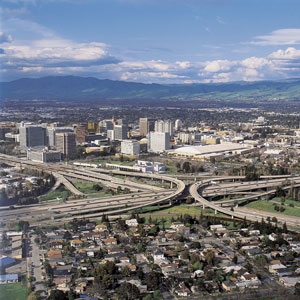
O Silicon Valley cobre a área ao sul da Bahia de San Francisco. O nome vem de Silício, a matéria-prima para os chips que iniciaram a revolução digital, mas hoje e associado a tecnologia em geral (ainda normalmente relacionado a computação, mas também incluindo biotecnologia e “green”). Cobre várias cidades parte da região da “Bay Area”, incluindo San Jose (Cisco), Santa Clara (Intel), Cupertino (Apple), Mountain View, Palo Alto (Google, Facebook), Redwood City (Oracle). No mapa acima, mas ou menos desde San Mateo na península até Fremont no lado leste da Bahia.
O coração do Vale do Silício é a cidade de San José, que tem cerca de 1 milhão de habitantes e fica 70km (uma hora de carro) da mais famosa, mas menor, San Francisco.
Como as pessoas vivem no Vale do Silício?
A vida é suburbana. São várias cidades emendadas. As pessoas vivem em casas térreas e as áreas residenciais são espalhadas com ruas largas. Algumas “freeways” cruzam a região (101 na peninsula, entre San Jose e San Francisco, 237 no Sul, e a 880 de San Jose a Berkeley no lado Leste da Bahia).
Uma das maiores surpresas quando cheguei aqui e fui para um shopping: o burburinho não era em inglês. Demograficamente, os americanos são minoria no vale. A maior parte da população é formada por imigrantes de outros paises: México, Índia, China, Vietnam, Filipinas, etc. Viver no vale é um exercício de diversidade e tolerância, com gente do mundo inteiro. Essa experiência é visível na variedade de restaurantes, arquitetura, vestuário, etc.
Ninguém sabe o tamanho exato da comunidade brasileira na área por que ela inclui imigrantes sem documentação e imigrantes transitórios que vão para ficar por tempo limitado. Mas existe uma comunidade emergente de brasileiros ligados a Universidade de Stanford e a tecnologia do Vale do Silício.
Em business, a cultura é anti-mainstream e casual. Não se usa gravata. Não é incomum encontrar gente de chinelo de dedo no escritório.
Por que a tradição em tecnologia?
É difícil de isolar um motivo para o sucesso sustentado do vale na área de tecnologia. Tem a ver com a diversidade (gente do mundo inteiro vem ao vale para “dar certo”), as Universidades (Stanford em Palo Alto, UC em Berkeley, etc), o eco-sistema (venture capitalists, empreendedores, mão-de-obra qualificada, infraestrutura).
E tem terremoto mesmo? É verdade que nunca chove?
Tem dezenas de tremores pequenos todo dia. O Vale do Silício é cortado de norte a sul no lado da peninsula pela San Andrea fault e no lado leste pelas Hayward e Calaveras faults, as linhas de deslocamento da crosta terrestre, onde a placa do Pacífico está sendo empurrada para baixo da America do Norte. Em San Jose, uma vez por mês você sente um tremor (de magnitude 4) em algum lugar perto. O último terremoto grande (6+) foi em 1989 (Loma Prieta).
Então, eu que moro no Vale do Silício desde 1992, ainda não peguei “the big one”. Para ver e acreditar: Mapa de terremotos na California essa semana.
Entre Abril e Outubro, as pessoas marcam casamentos ao ar aberto sem se preocupar muito pois chove muito pouco. No inverno chove e a temperatura chega próximo de zero. No verão chega a 40C, mas o ar é muito seco então a sensação de frio ou calor é menos extrema que em São Paulo.
Dois dias no Vale do Silício
Se você resolver me visitar e tiver dois dias para visitar o vale, aqui estão algumas sugestões:
– Palo Alto e Universidade de Stanford – University Ave, saída da Hwy 101. Visite a garagem onde começou a HP e o campus da universidade berço de várias das empresas do vale (visite a maior coleção de esculturas do Rodin fora da França, incluindo “O Pensador”).
– GooglePlex – Arrume alguém conhecido que trabalhe na Google em Mountain View e seja convidado para almoçar lá. Você vai notar o ambiente desestruturado e informal e a cultura empresarial dominante no Vale do Silício. Se não conseguir ser convidado, almoce no Calafia em Palo Alto, o restaurante do primeiro “chef” contratado pela Google para cozinhar para os funcionários, uma amostra da perpectiva Californiana da cozinha (organicos, locais, ingredientes frescos).
– Vinícolas de Santa Cruz Mountains – Quem pensa em vinho Californiano normalmente pensa em Napa e Sonoma, que são regiões vinícolas de renome internacional. O que pouca gente sabe é que a região vinícola de Santa Cruz Mountains é mais acessível e tem vinícolas tão interessantes e produzindo os melhores Pinot Noirs. Como as vinícolas são pequenas, os vinhos não são encontrados e outros lugares.
– Santana Row – Santana Row é o equivalente local da Rodeo Drive em Los Angeles. É onde estão as lojas das marcas de luxo, em um “open air shopping mall”. Aproveite para visitar o showroom da Tesla (carros elétrica). Em um final de semana, jante no Straits Cafe (um restaurante com preços moderados e cozinha de Cingapura). Depois das 10, o restaurante vira night club e você vê uma amostra da diversidade do vale vestida para caçar.
– Museus de Tecnologia – Para mim, um museu de tecnologia é um paradoxo. Mas tem várias opções. O mais interessante é o Tech Museum no centro de San Jose que tem atrações para crianças e marmanjos. Museus mais focados: Intel Technology Museum em Santa Clara mais focado em chips e silício e o Computer History Museum em Mountain View.
– Empresas de tecnologia – O melhor é conhecer alguém que tenha acesso, mas dá para pegar um pouco do ar simplesmente passando pelas empresas. Dirija pela 101, 237 e você vai todos os nomes em tecnologia: Oracle, Yahoo!, Google, Intel, Cisco, …
– Restaurantes Brasileiros – Se ficar mais tempo e sentir saudade. Não tem muito não, reflexo da comunidade pequena. Churrascarias viraram moda nos EUA nos últimos anos. A melhor é a “Espetus” em Burlingame. Para comida mais caseira no vale do silício, a gente vai no “Senzala” em Mountain View.
Quando vier, me avise. Terei prazer em oferecer dicas adicionais. Até então conecte comigo em @Marcio_SaitoBR e acompanhe o hashtag #diretodovale.

Over the past couple of weeks, I have participated and seen several discussions on the merits of general score analytics in Social Media engagement (like Klout and PeerIndex).
On one hand, most of the criticism come from experts (for the most part deserving of the title) who complain about the score not expressing the quality of their expertise. They say the scores are just a measure of the “time you spend in Twitter”.
Yes, I think it is important to understand what is being measured: level of engagement in social media. Once we acknowledge that, I think general scores are useful and can be considered a valid dimension of “influence”.
On the other hand, if we accept it as a valid measure, a social media engagement score reflects influence only to the degree you use social media to exert it. It is not a measure of the total expertise or influence of a person.
We should take general engagement scores like Klout and PeerIndex with a grain of salt. I agree with the ones who consider the tagline “The Standard for Influence” a bit of a stretch. But every marketing slogan is a stretch.
Then this morning, Klout had a technical problem and most users saw their scores drop drastically o single digits for a couple of hours. That gives the critics the perfect opportunity to say: #fail!
The irony of the incident is that the Klout score for @klout (the user representing them in interaction with the community) will go up because there were so many people complaining about their scores (increasing volume of mentions and conversations impact the engagement score positively).
Does that event show the flaws in social media engagement scoring? (How can a negative incident increase your score?!)
Or does it simply reflect the fact that the event validated the influence of @klout (or else why would so many people check their own score early in the morning, notice the glitch, and trigger such large number of conversations?).
What do you think?


 Marcio Saito